
Field Notes
How long a shoe horn should be
Two measurements with a tape decide it: one standing, one sitting. The rest is steel, wood or plastic.
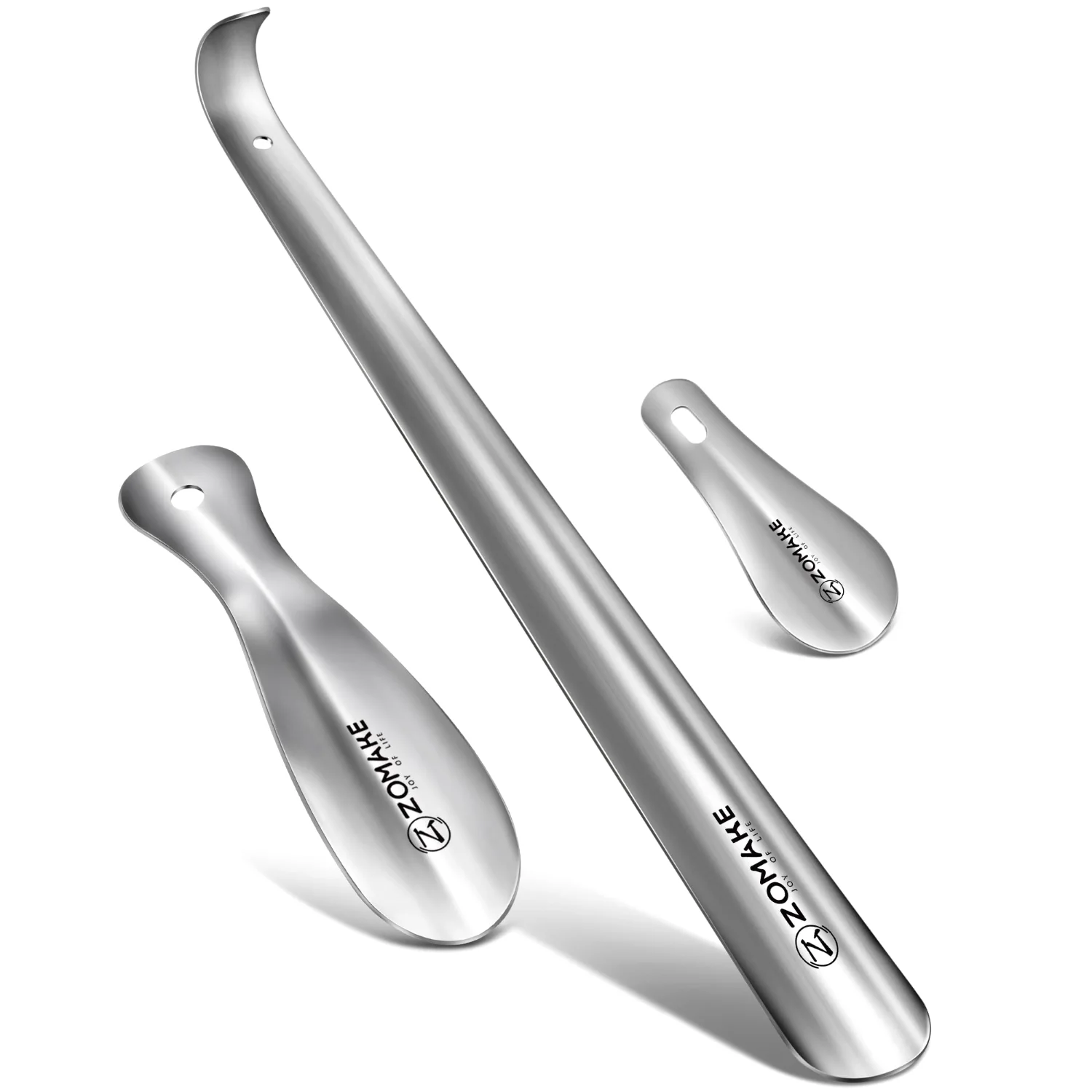
What a shoe horn does
A shoe horn is a simple tool with one mechanical job: it guides your heel into the shoe so the back of the shoe does not fold under it. That back portion, the heel counter, creases or collapses when a heel is forced down past it, and over time those folds are what make a shoe lose its shape and break down. With a horn in place, the opening stays aligned while your foot slides in, the counter stays straight, and the shoe holds its fit for longer.
Stiff new shoes and dress shoes gain the most. Their heel counters are firm on purpose, to lock the shoe to the foot, and pushing a heel in by hand or by stepping down on the back bends exactly that structure. A horn carries the heel past the counter smoothly, so the material never folds, and your sock slides along the horn instead of dragging against the lining.
A horn does not change the fit of a shoe. It does not stretch leather or reshape a knit upper. It only makes the way in easier and protects the shape of the shoe as you put it on. The difference shows most on shoes you wear every day and on shoes that are snug. Keep one where you actually put your shoes on, by the door or in the bag you travel with, and the habit takes care of itself.
Measure yourself
Stand with your arm relaxed at your side and measure from the floor to the tip of your longest finger. A tape measure makes it easy, and rounding up to the next whole inch gives you a little extra reach. That first number is the length that lets you put shoes on while standing, without bending over.
Then sit on the chair you use by the door, or the bench where you usually put your shoes on, in the posture you normally use. Measure again from the floor to your fingertip with your arm relaxed. This second number is the length for putting shoes on seated, and it is often several inches shorter than the first.
Compare the two before you decide. If you sit on some mornings and stand on others, choose the length that fits the posture you use most. Think about where the horn will live, too: a compact horn tucks into a pocket, while a long one wants a hook or a corner by the door. The numbers are a guide rather than a rule, because how a length feels in the hand is personal.
Lengths and how they change the motion
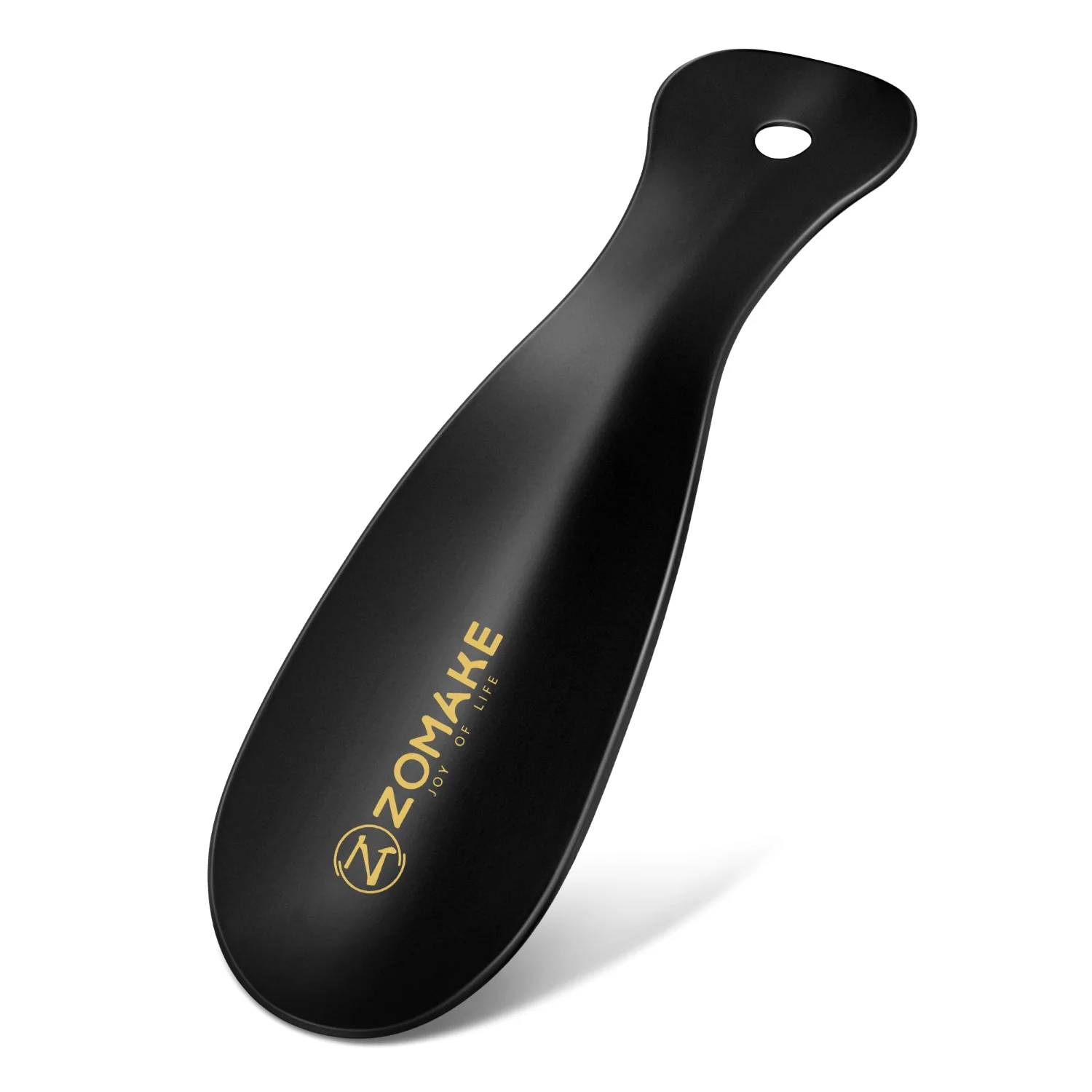
Short pocket horns run from 3.9 to 7.5 inches, and you bend down to use them. They fit in a pocket or a small bag, and the motion is hand to shoe, with the shoe on the floor. They suit quick changes, light shoes, and any place where a compact tool is what you will actually carry.
Medium horns, from 11.8 to 16.9 inches, suit a low seat or a short bench. You sit and reach forward with a little lean while the horn holds the shoe opening, so you bend much less far than with a pocket horn. This is the length that tends to live by a hallway bench.
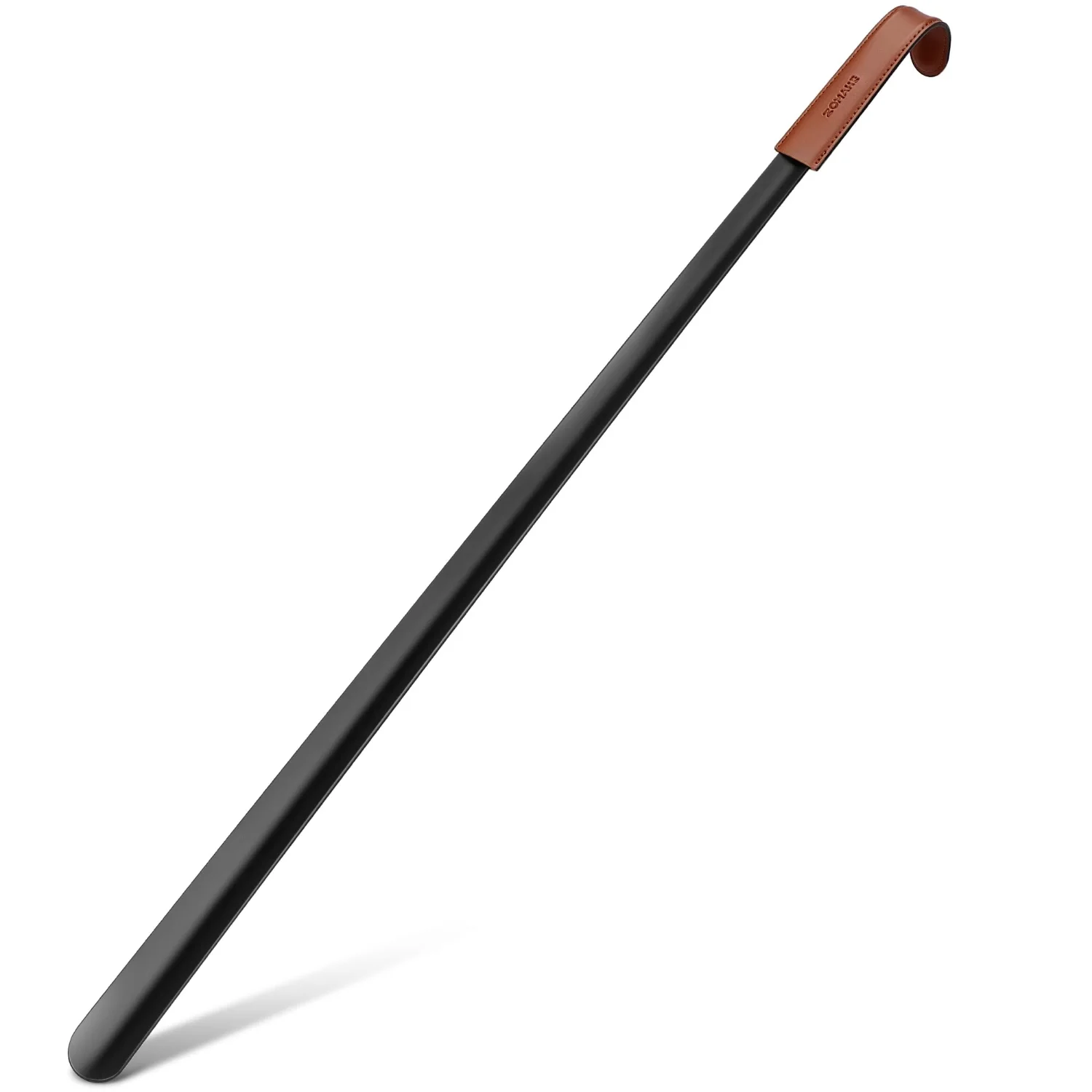
A horn of about 22.8 inches fits a standard dining chair. You sit upright and extend your arm, and the motion is mostly arm rather than a forward bend of the body.
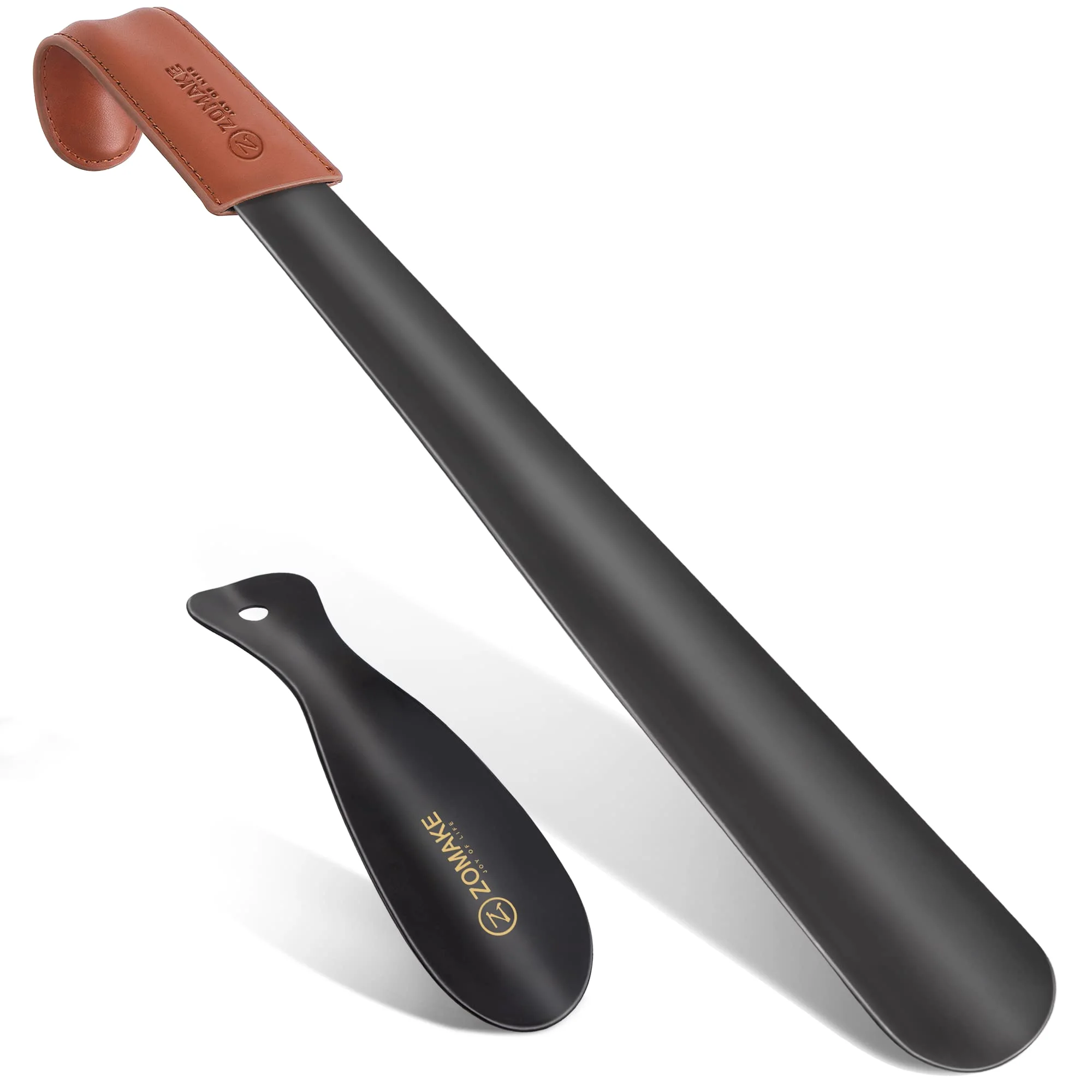
Long horns of 28.5 and 31.5 inches are for standing. You stand upright, hold the horn at about hip height and slide your heel in without bending at all. Our ZOMAKE long-handle shoe horns come in exactly these lengths, and many come paired with a short horn for the bag.
| Length | How you use it | Where it lives |
|---|---|---|
| 3.9 to 7.5 in | Bend down and guide the heel by hand | Pocket, bag, glove compartment |
| 11.8 to 16.9 in | Sit on a low bench and reach forward | Hallway bench, mudroom hook |
| About 22.8 in | Sit on a dining chair and extend your arm | Entry chair, coat rack |
| 28.5 to 31.5 in | Stand upright and slide the heel in | Entryway wall, porch |
Each jump in length changes the motion. Short horns make you bend, and long horns move the work into your arm.
Steel, wood or plastic
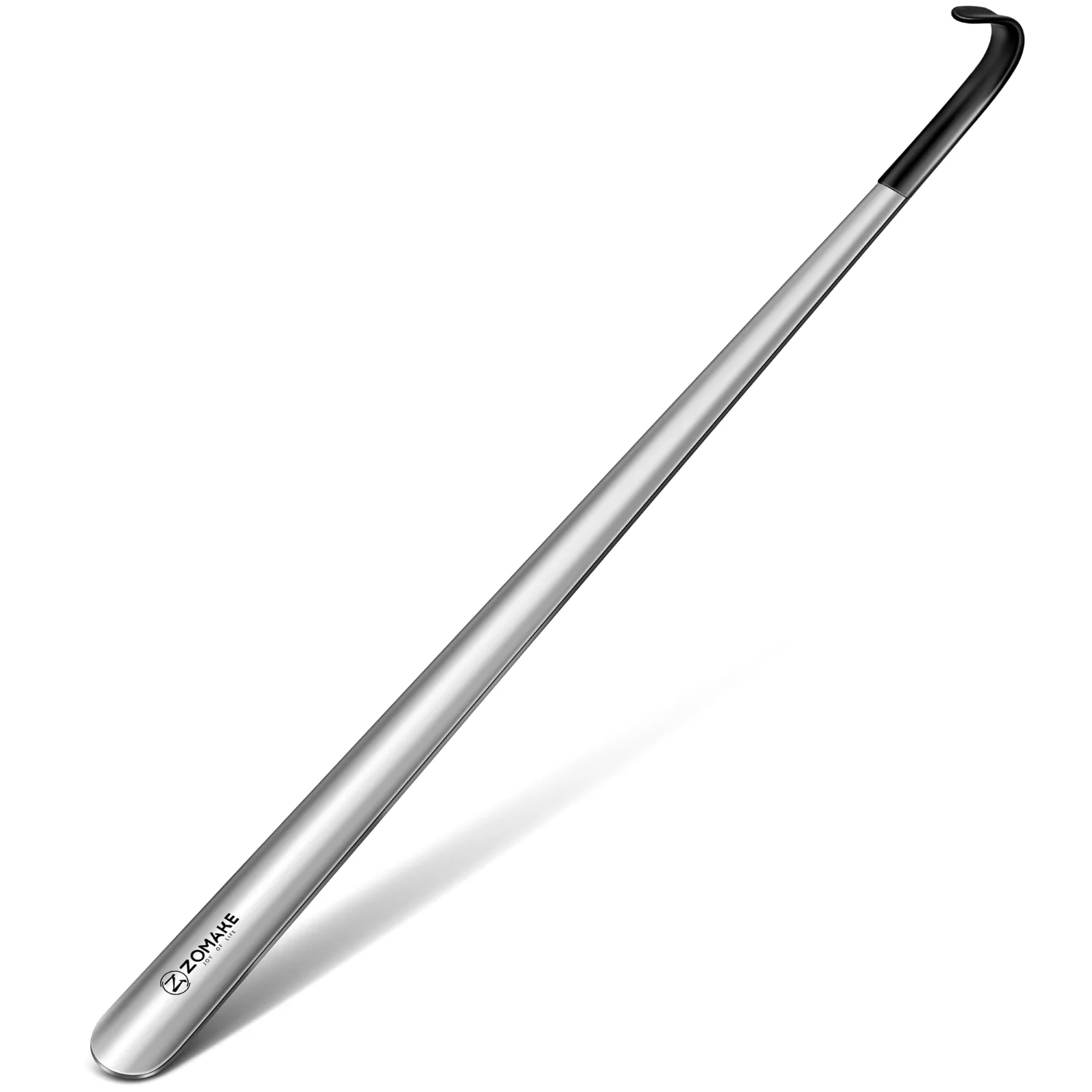
The material changes how a horn feels and how it goes into a shoe. Stainless steel is thin and rigid, and that thinness lets it slip into a tight heel and a narrow opening, while the rigid surface keeps it from flexing as the heel slides down.
Beech wood is heavier and warmer in the hand. It is usually thicker than steel and gives a grip some people prefer, and it stays firm enough to guide the heel steadily.
ABS plastic is light and inexpensive, so it is easy to carry in a bag or to leave at several doors. Plastic horns are usually a little thicker than steel, which matters with snug shoes, but they do the same guiding job, and the price makes owning more than one sensible.
Many of our long horns come paired with a short one, and the pair covers both routines: the long horn stays at the main door, the short one goes in a coat pocket or a travel bag. Choose the material by how you use the horn, and the count by how many doors you put shoes on at.
Boot jacks for boots a horn does not help with
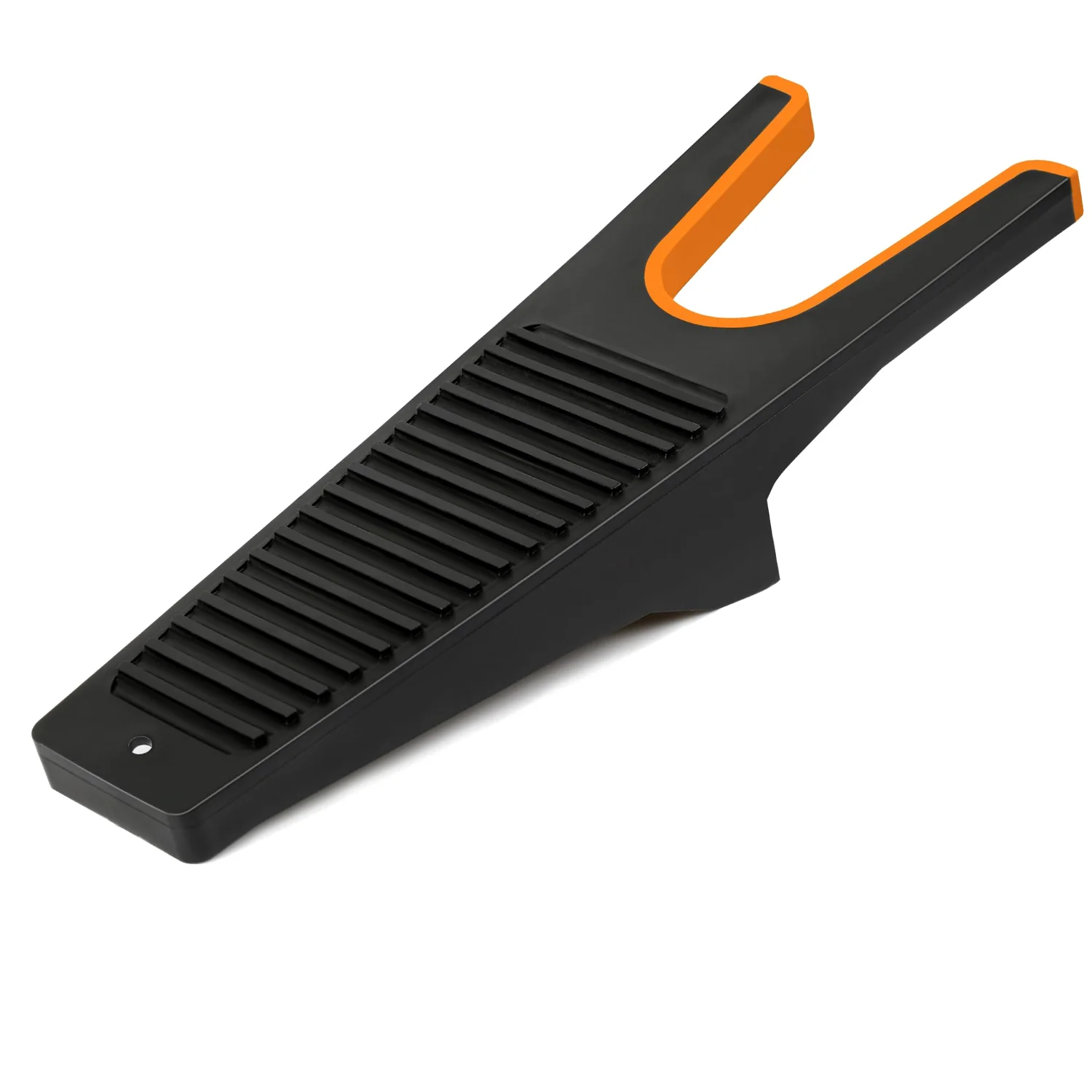
Tall boots and heavy boots are awkward with a horn, because a stiff shaft and a bulky heel make it hard to slide anything down the back. Taking them off is the harder part anyway, and that is the job of a boot jack: a flat plate with a notch at one end, raised off the floor.
Set the heel of the boot in the notch and put your other foot on the plate to hold it down. Then draw your foot back, and the notch holds the heel while the boot slides off. You do not pull at the boot by hand, and you do not bend down to it.
Ours come in 9 and 12.6 inch lengths, one of them in iron. A horn and a jack work well together: the horn for shoes and low ankle boots, the jack for tall boots, both kept by the door where you take your outdoor footwear off.
Start with the number
Find the ZOMAKE size that fits your day
Every size and every color in the ZOMAKE collection is one click from here, and you place the order with our retail partner.