
Field Notes
How wide should an umbrella be to keep two people dry
Why one shoulder always gets wet, what each canopy size covers, and when the compact in your bag is still the right umbrella.
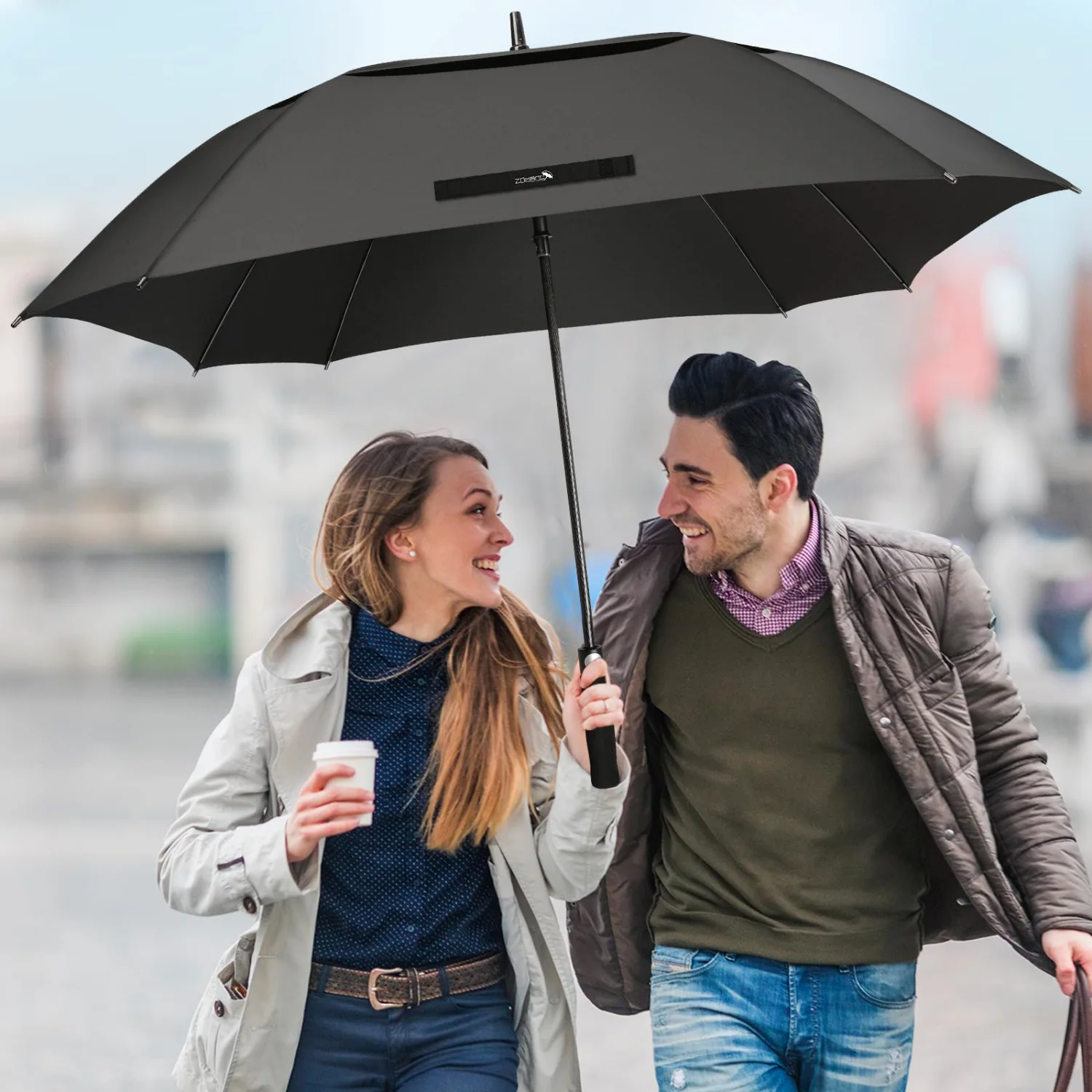
Why one shoulder gets wet
The size on a golf umbrella is its arc: the open canopy measured over the top, from the tip of one rib to the tip of the opposite one. Because the tape follows the dome, the arc is longer than the width underneath it, and a 62 inch arc is about 53 inches straight across. Once the umbrella is over your head and tipped against falling rain, the sheltered area shrinks further.
Two people are wider than they think. Standing shoulder to shoulder you might fit under a canopy. Start walking and steps, sway and the small gap between your shoulders add up. One person tends to anchor the umbrella over their head. The other shifts a little back, or a little forward. Over a short distance one wet shoulder appears. Sideways steps, carrying a bag and the way you hold the handle all change how much of each person a canopy covers.
A tilted canopy covers less ground than its flat measurement suggests. Angle the umbrella toward incoming rain and the projected width along the ground is reduced. Rain falls at various angles, not straight down. If a canopy is held high and flat the number on the spec sheet is closer to reality. If it is held low and angled to block driving rain the shelter over your shoulders becomes smaller.
Walking together makes coordination important. If you walk close and lock arms you bring more of your combined outline under the canopy. If you walk with a gap or carry a golf bag the umbrella has to cover that extra shape. The practical result is simple. Pick a canopy that gives a little extra room beyond the two bodies you imagine. That extra fabric buys space for movement, bags and angle.

The sizes, one by one
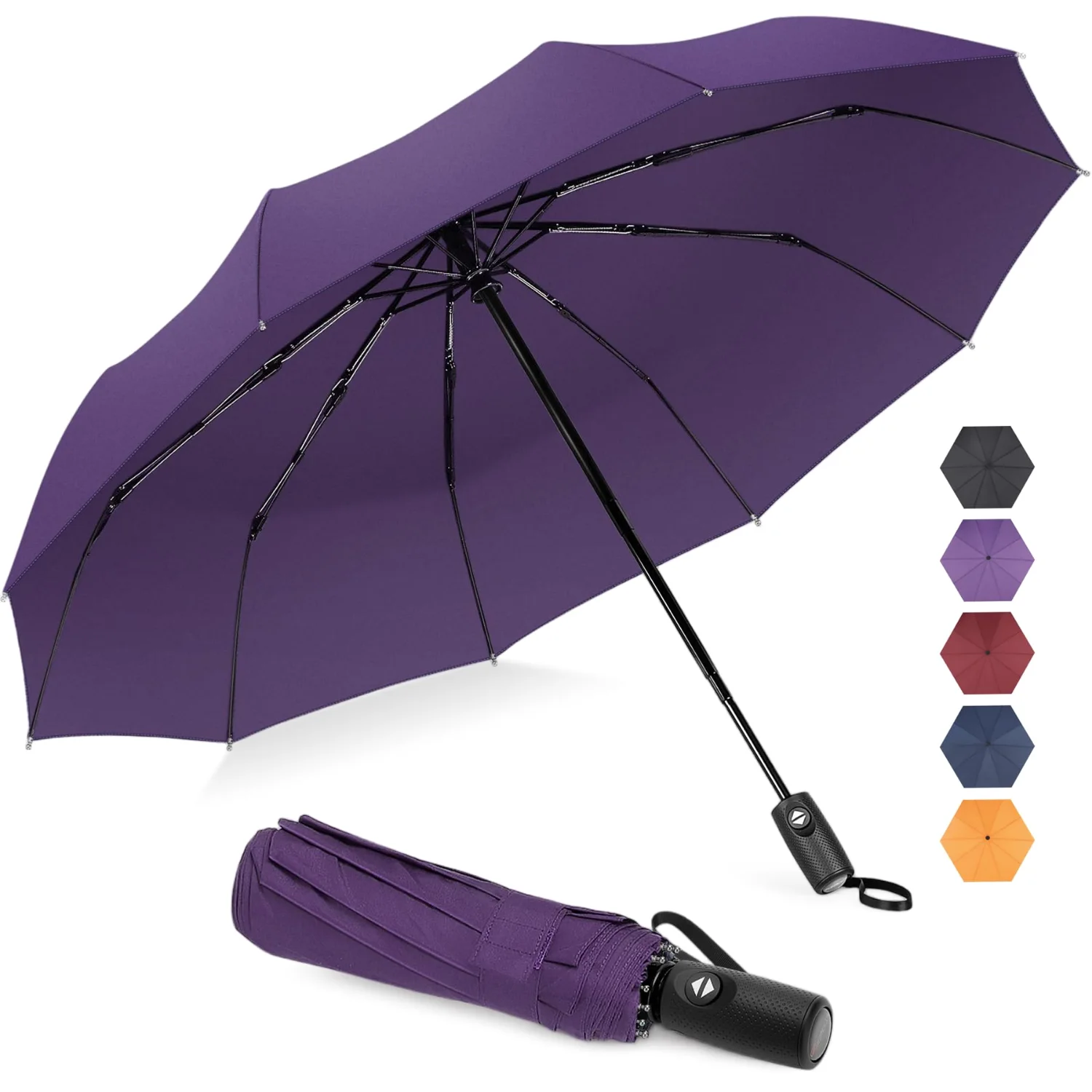
Compact travel umbrellas open and close on one button. Their canopies typically range from 42 to 46 inches. A 10-rib compact folds to about 12.8 inches closed. These fit easily in a daypack or a briefcase. They shelter one person and a small bag. If you want something you can keep in a work bag or backpack all day, this is the sensible choice.
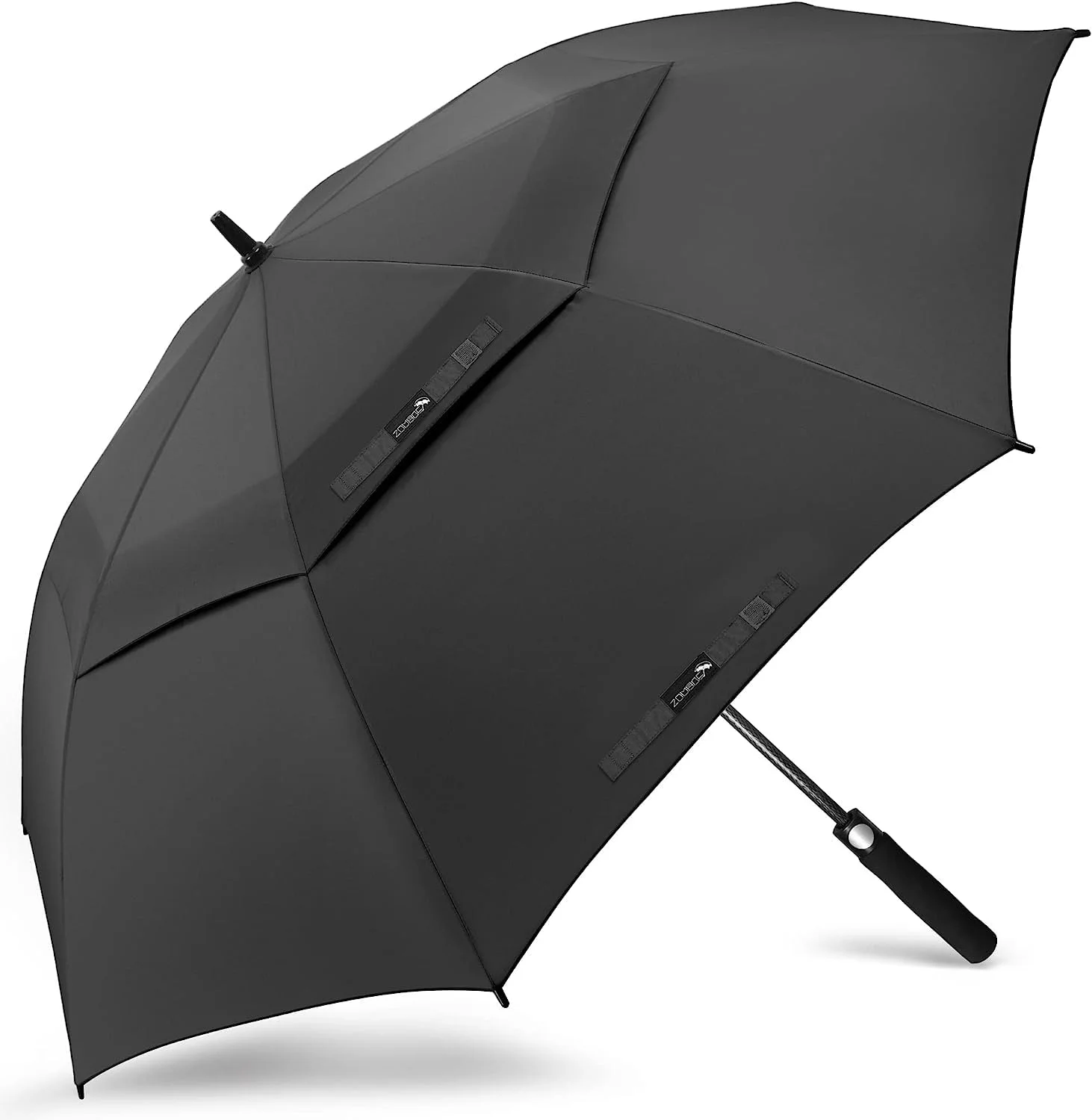
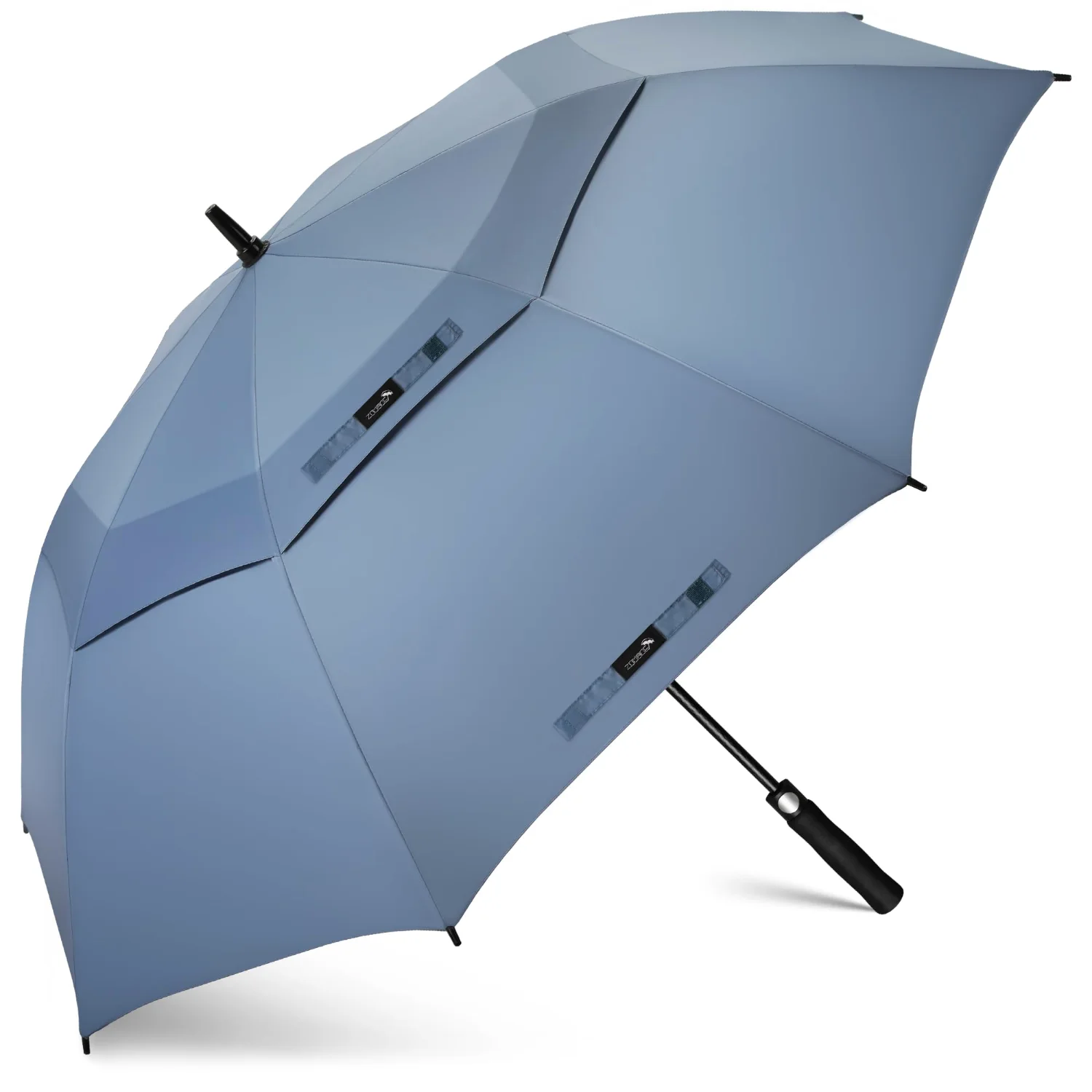
Golf umbrella sizes begin at 51 and go up through 54, 62, 68, 72 and 80 inches, measured along the arc. A 51 or 54 inch canopy shelters one person plus a golf bag or a briefcase. The 62 inch size works well for two people who walk close together. The 68 inch canopy adds room for two plus a bag between you or slightly wider shoulders. The 72 and 80 inch models give two people comfortable space with room to shift without exposing the shoulder.
Choose based on how you walk. If you are often side by side and shoulder-to-shoulder a 62 inch might be enough. If you carry a golf bag, roll a wheeled cart or want room to block wind and angle, move up to 68 or 72. For two people who want elbow room, the 80 inch canopy offers the most space. Every ZOMAKE golf umbrella is listed by exactly this open measurement, so the number on the card is the one in the table below.
| Arc of the canopy | Who stays dry | Closed, where it lives |
|---|---|---|
| 42–46 inches | One person and a small bag | Daypack, briefcase or coat pocket |
| 51–54 inches | One person and a golf bag or larger briefcase | Car, closet or coat rack |
| 62 inches | Two walking close together | Car trunk, golf cart holder or coat closet |
| 68 inches | Two plus a bag between you | Car trunk or golf cart holder |
| 72–80 inches | Two with room to shift | Car trunk or golf cart holder |
What the bigger canopy costs you
A bigger canopy has tradeoffs beyond the shelter it provides. Compact umbrellas stow into a bag without thinking. Golf umbrellas generally do not fold. That makes them longer and less convenient to carry through crowded places, and on a train or in an office a long umbrella has nowhere obvious to go.
Where it lives matters. A long umbrella fits well in a car trunk or a golf cart holder. It is comfortable to leave in those places and grab when needed. A compact fits inside a backpack or the main compartment of a packable daypack. If you already carry a bag a compact lives with your things. If you only use a large umbrella for a short walk from car to door the car trunk is often the practical home.
Crowded sidewalks and quick transitions are another cost. Carrying a long umbrella through a crowd requires attention. Doors, escalators and narrow hallways expose more of the fabric and tip of the shaft to other people. A compact tucks against your side and reduces the chance of brushing past someone. If you frequently meet other people on the sidewalk or navigate tight entryways a compact saves small hassles.
Consider how often you want to carry shelter versus store it. If you want protection on demand and do not mind a longer item in the car, a bigger canopy pays off for two. If you prefer to keep an umbrella with you all the time for single-person coverage, a compact stays quieter in daily life. Match the canopy to the moments you meet most often.
Wind
Wind changes how an umbrella performs as much as canopy size does. Fiberglass ribs are common because they flex under load and return to shape. That flexibility reduces the chance that ribs will bend permanently when struck by gusts. A flexible frame does not guarantee trouble-free use, but it makes a canopy more forgiving in gusty conditions.
Many golf models use a vented double canopy. The gap between the two layers lets a gust pass through the top rather than force the entire canopy up. In use the vents reduce sudden pressure build up under the fabric. That design also helps when you angle the umbrella into a crosswind. Letting the wind move through a controlled path lowers stress on the ribs and shaft.
How you hold the umbrella matters. Point the leading edge into the wind and work with the gusts rather than against them, and keep the handle close to your body, where your arm can hold it steady. When gusts are strong, hold the canopy lower and angled into the wind, so there is less of it for the wind to lift.
A long canopy catches more wind than a smaller one. Larger canopies provide more open area for gusts to act on. The vented double canopy and a flexible rib system mitigate that exposure. When conditions worsen choose shelter, not a larger umbrella. A compact in your bag and a sturdy golf umbrella in the car covers most situations without asking you to fight extreme wind.
Keeping two
A simple plan reduces the wet shoulder problem. Carry a compact in your bag for immediate coverage. Keep a larger golf-style umbrella in your car or at the office for shared shelter. The compact protects you on the walk from the subway to the office. The golf canopy waits for the walk from the parking lot to the front door.
If you travel by air remember the Transportation Security Administration allows umbrellas in both carry-on and checked bags. Check your airline for any size or weight limits they set. A compact is easy to carry through security and into the cabin. A long golf umbrella may be better checked or stowed in a carry bag because of its length.
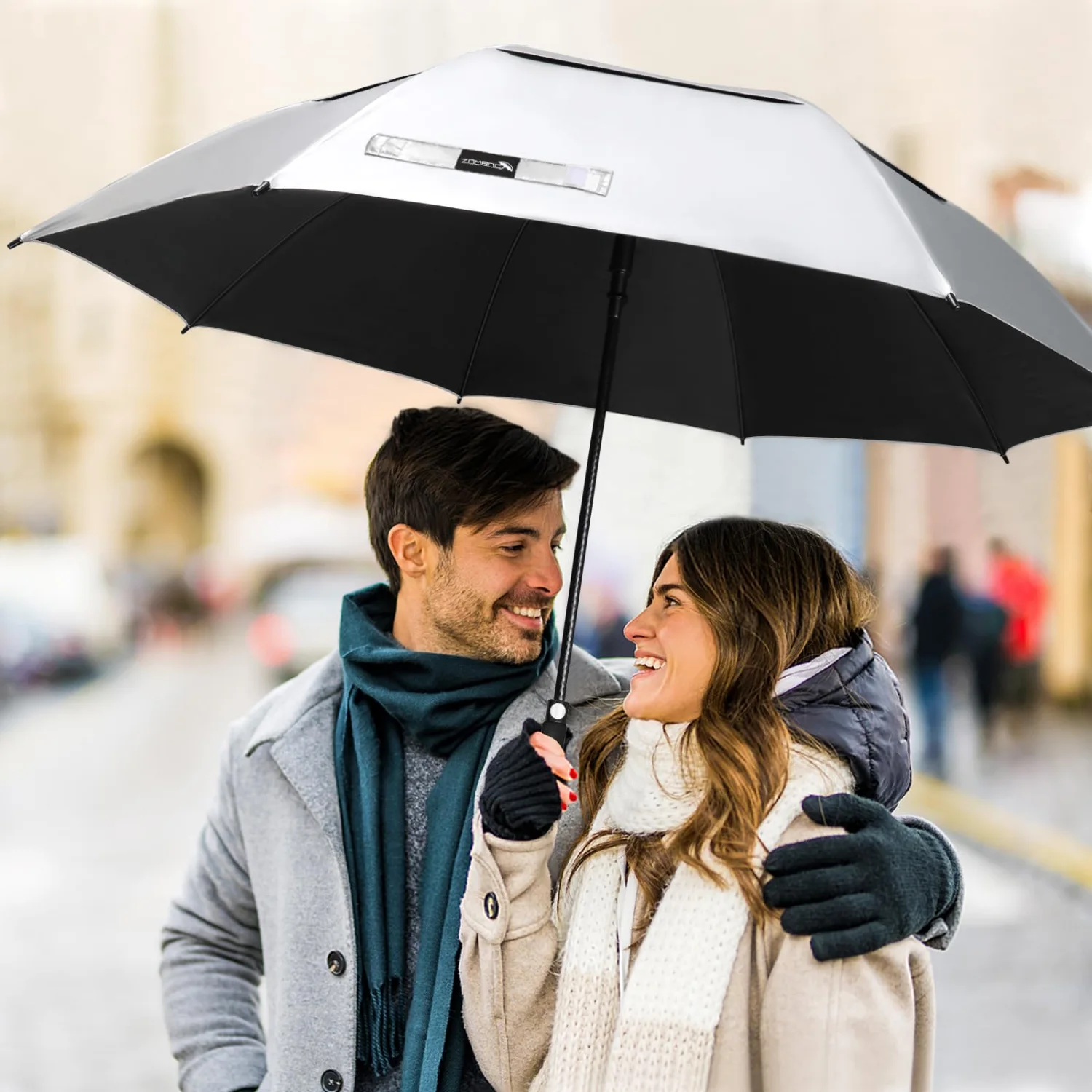
Sun protection is part of the same decision. CDC Sun Safety notes that shade under an umbrella reduces the risk of sun damage. Many UV umbrellas include a label rated UPF 50 plus and have a silver underside. If you go to the beach or spend long periods in direct sun consider a UV-rated canopy. Clip-on umbrellas that attach to a chair arm offer a hands-free option for shade on a bench or a beach chair.
A packable daypack makes carrying a compact less of an ask. Our packable backpacks fold into their own zip pocket and free up a hand for a second umbrella when you need it. Plan for the two moments you face most often. A compact on your person and a full-size canopy within reach give you shelter for the single steps and the shared walks. That simple habit keeps the shoulder dry.
Start with the number
Find the ZOMAKE size that fits your day
Every size and every color in the ZOMAKE catalog is one click from here, and you place the order with our retail partner.