
Field Notes
What fits in a 20 liter daypack, and when to go bigger or smaller
A liter is hard to picture until you lay your day out on a table. Here is a 20 liter day, and when 10 or 35 is the better size.
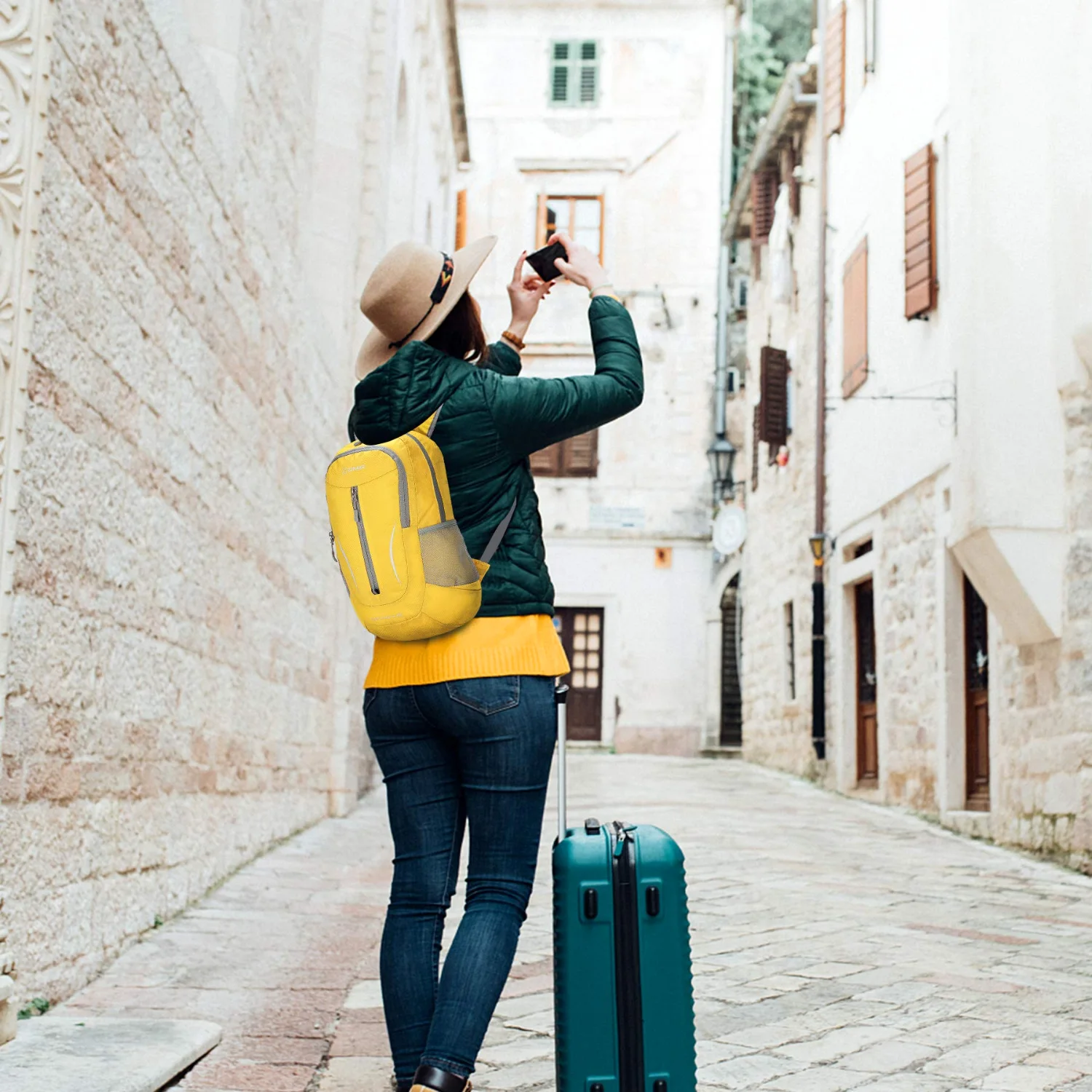
Picturing liters: start with a water bottle and lay your day on a table
Start with a single, familiar object. A one liter water bottle is a simple unit you can hold in your hand. Line up twenty of those bottles in your head. That stack gives a rough sense of the volume inside a 20 liter daypack. It is not a precise shape, but it is a fast way to imagine how much room you have.
Lay the gear you plan to bring across a tabletop before you choose a pack. Place a lunch, a jacket, a phone, keys and a bottle on the surface. If an item overlaps visibly with another, that is a signal your pack will be tight. If everything sits without crowding, you have room for extras like a small camera or a sweater.
Think in layers as well as in liters. Bulky things take more space than their liters suggest because of dead air. A compressible down jacket packs down farther than a cotton sweatshirt of the same warmth. Roll soft items and stack flat ones. Hard objects, like a water bottle or a camera, sit where they will make the most sense for balance.
The act of laying out your day turns liters into real choices instead of abstract numbers, and it usually shows that water and one extra layer take up more room than everything else together.
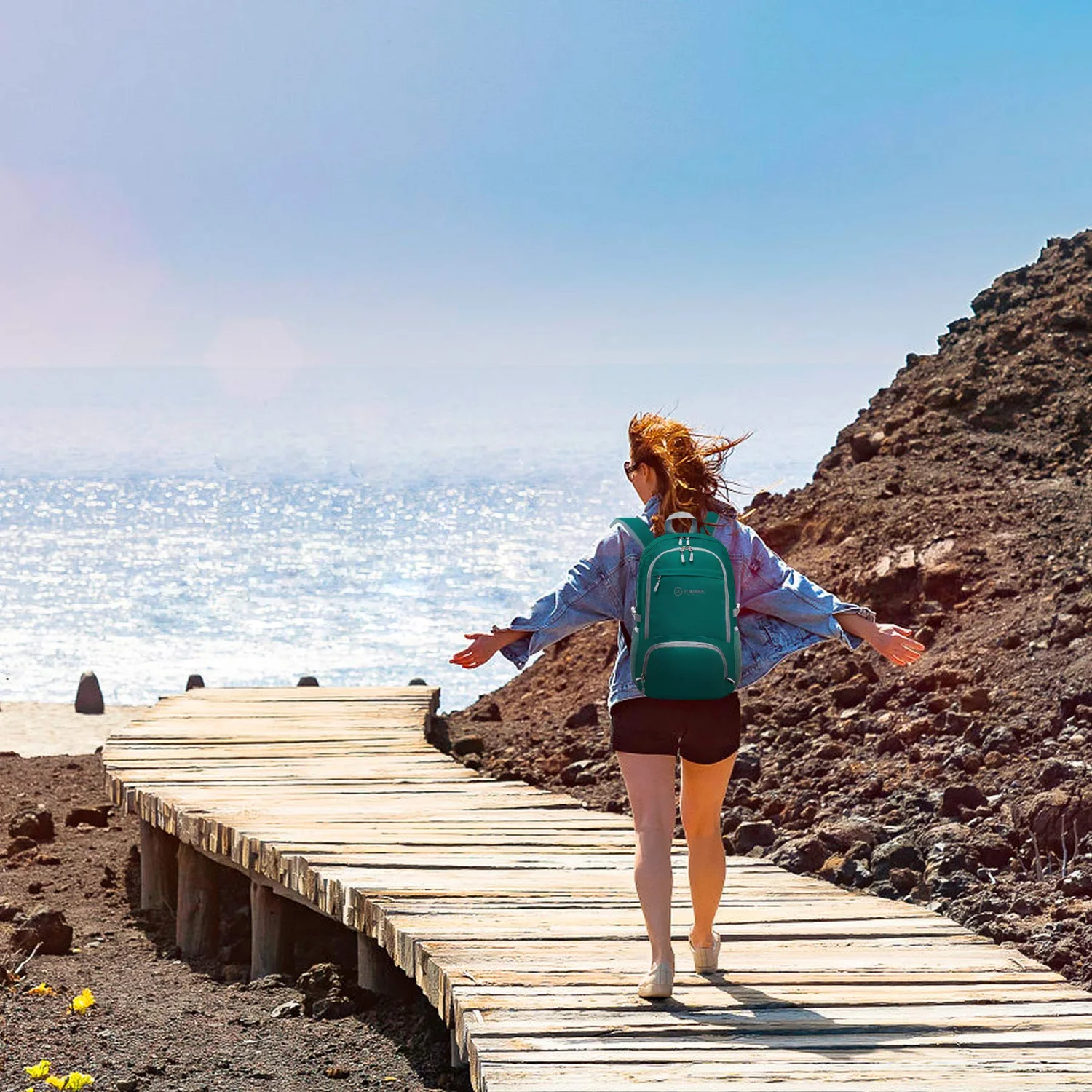
A 20 liter day, item by item
A 20 liter daypack is a compact but practical size. It holds essentials for a full day of walking in town or a short hike on marked trails. Start with water. A one liter bottle sits comfortably along the side or in an internal pocket with room for another small bottle if you need it. The US National Park Service lists the Ten Essentials as navigation, sun protection, extra clothing such as a jacket or rain shell, illumination, first aid, fire, repair kit and tools, extra food, water and emergency shelter. The service advises you to pack an extra layer for the most extreme conditions you could meet, and to drink water often, before you feel thirsty.
A packed lunch fits. A sandwich, a small fruit and a snack bar tuck against the bottle. Add a light rain shell and a thin insulating layer. These compress into the main compartment but still leave room for small items such as a phone, keys and a wallet. Place heavier items low and close to your spine for better weight distribution. A small first aid kit and a folded map or guidebook slide into flat spaces.
Sun protection is another consideration. The CDC says that shade under an umbrella, a tree or other shelter reduces the risk of sun damage. UV is strongest between 10 a.m. and 4 p.m. daylight saving time in the continental US. A compact sun hat or a lightweight umbrella will fit with those other essentials. If you plan to use a laptop, choose a pack with a separate laptop compartment sized for devices up to 15.6 inches. Otherwise leave the laptop at home to keep the load light.
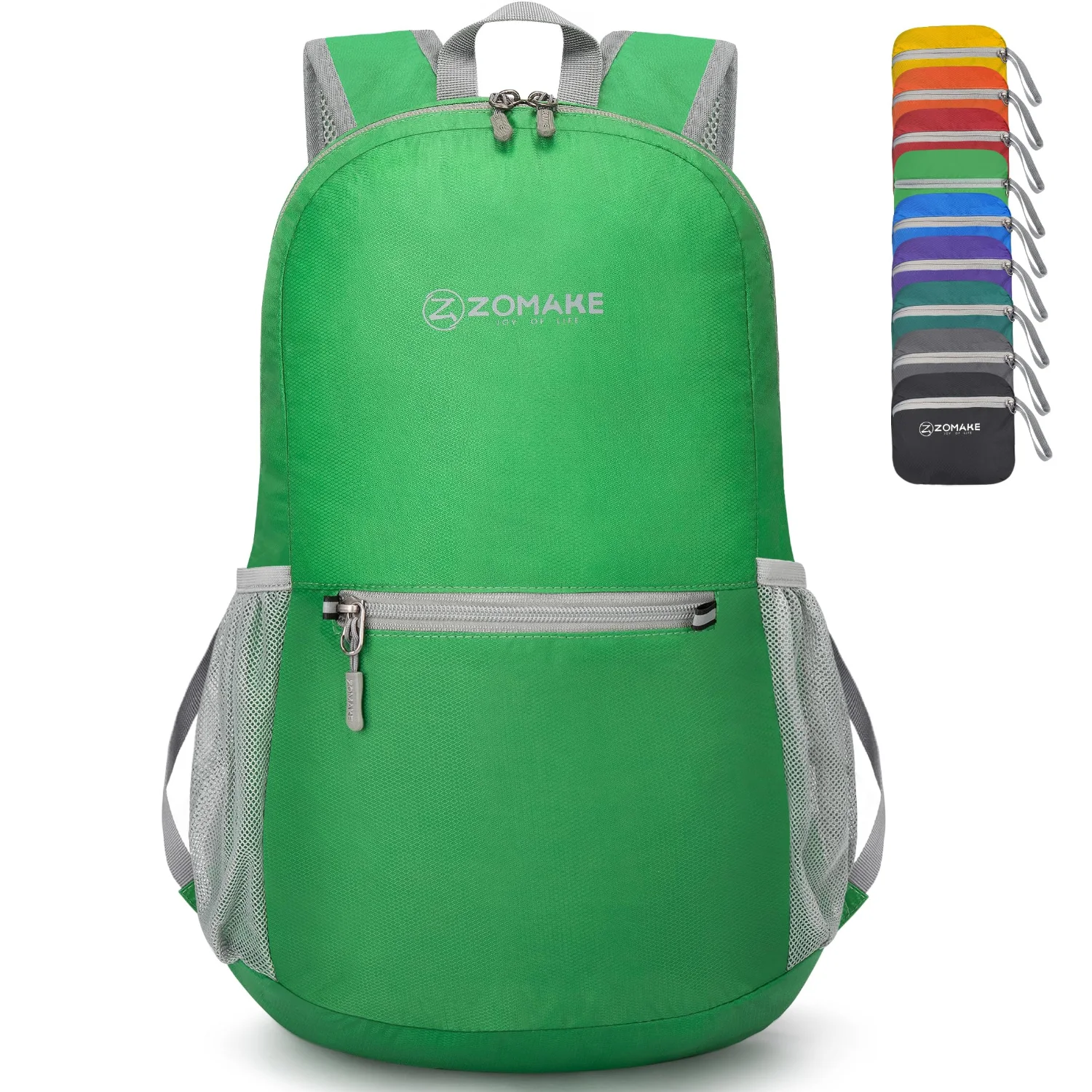
When 10 liters is enough and when 25, 30 or 35 is not too much
There are days when a 10 liter pack covers everything you need. Short walks, quick errands, gallery visits and a commute with minimal gear are examples. In that size you can carry a small water bottle, a phone, keys, a light wallet and a folded windbreaker. The bag is small enough that it feels almost weightless. That simplicity helps when you plan to be on your feet and moving constantly.
Move up to 20 liters when you want a real buffer. Longer walks, picnics or a day with changing weather are easier to manage in this size. You can carry lunch, an extra layer, a larger water bottle and some camera gear without crowding. If you sometimes carry a tablet or a compact camera, the space prevents crushing soft items and keeps things organized.
Choose 25, 30 or 35 liters when you carry for someone else as well as for yourself. Shared items make a larger pack useful. If you are carrying extra food and water for two people, a thermos, a tripod or a bulkier jacket then 30 or 35 liters prevents daily discomfort. Use the larger sizes for full-day hikes with more complex gear, for family outings where you carry things for others, or for city days when you want to switch between errands and an impromptu market purchase.
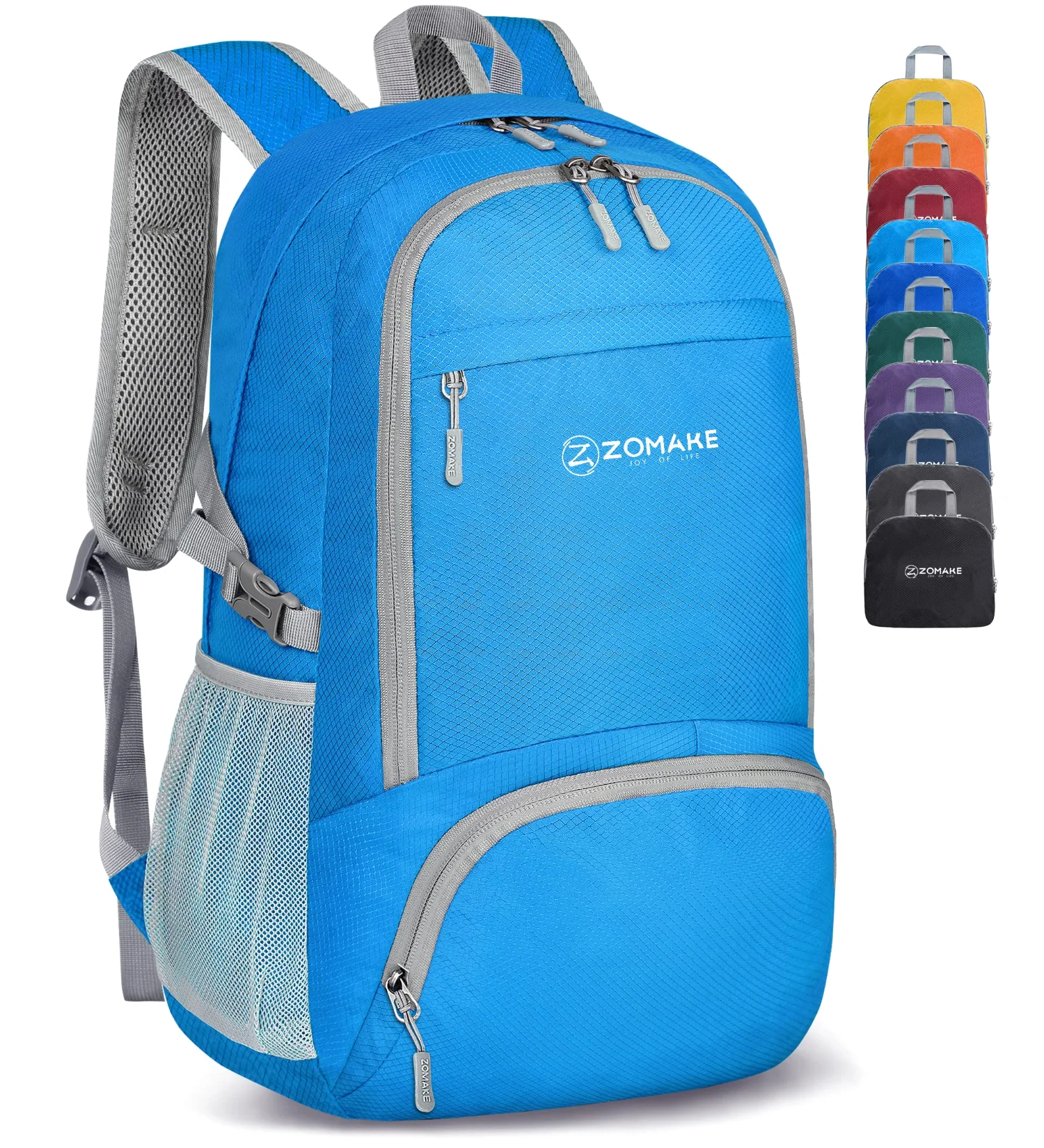
Our ZOMAKE packable backpacks come in sizes from 10 to 35 liters, so you can pick the volume that matches how you actually pack instead of guessing from how it looks on the shelf.
| Capacity | What goes in | The day it is for |
|---|---|---|
| 10 L | Small water bottle, phone, keys, wallet, light layer | Short walk, museum visit, errands |
| 20 L | One or two bottles of water, packed lunch, rain shell, layer, phone, small kit | Day hike, city exploration, commute |
| 30 L | Extra food, shared water, camera or tripod, thicker jacket | Full day out for two, photo trips, multi-activity days |
| 35 L | Bulkier outerwear, multiple people’s gear, shopping | Long outings, family days, extended carry needs |
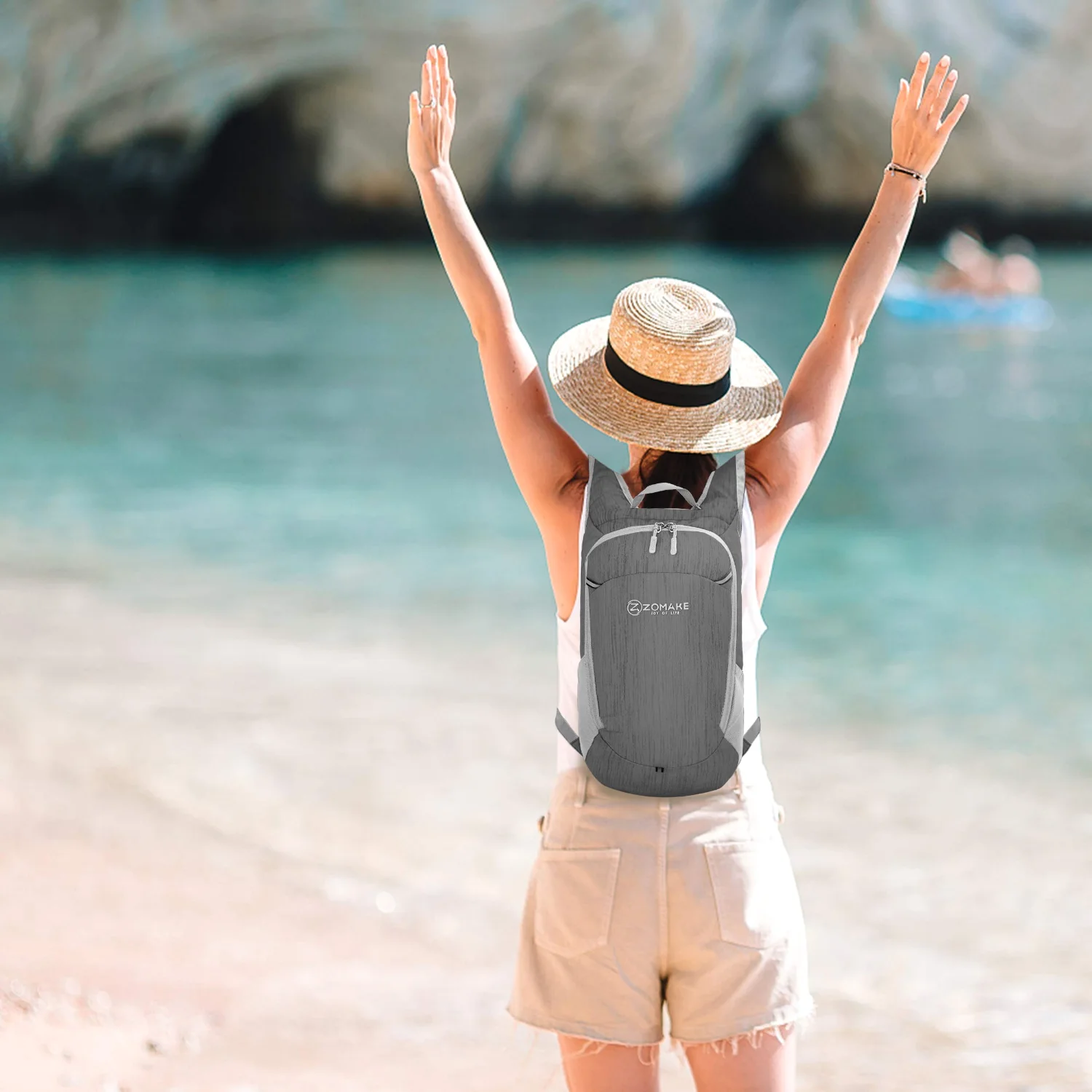
What "packable" actually means for a daypack
Packable backpacks are designed to disappear when you do not need them. The core idea is a bag that folds into its own zip pocket inside the main compartment. That pocket becomes a bundle about the size of your palm. The 20 liter pack weighs about half a pound, so it rides in your suitcase or a larger bag until you need it.
This light weight is an advantage for travel and for days when you switch bags, because a folded pack costs you almost nothing to bring along. Mesh shoulder straps that adjust help keep it usable for a range of torso lengths. Most packable designs are simple. Many do not have an internal frame or a hip belt. That tradeoff keeps weight down and folding straightforward. It also limits how much load you can carry comfortably over long distances.
Expect less padding than in purpose-built hiking packs. Most packable backpacks are not built to protect a heavy laptop. A model with a separate laptop compartment will accept a device up to 15.6 inches, but many of the packable styles prioritize compressibility over thick padding. Organization varies by model. Some have multiple pockets and a small front compartment. Others keep access simple with a single main compartment and one or two side pockets for bottles.
If your day includes heavier items or long sustained carrying, test how a pack fits with a loaded weight. If the shoulder straps dig in or the pack sways, a larger or more structured pack may be the better choice. Packable bags excel when you value minimal weight and the ability to add capacity on the go.
Rain and the limits of water resistance
Many packable backpacks are made from tear-resistant, water-resistant nylon. That fabric sheds light rain and splashes. The critical point to remember is that water-resistant does not equal waterproof. Zippers and seams on most packable packs are not sealed, so water can find its way in during heavy rain or when a bag sits in a puddle.
For items that must stay dry, use an inner dry bag or a zip-top plastic bag. Phones, passports, paper maps and electronics deserve that extra layer of protection. A small zip bag is flexible and inexpensive. It also keeps things dry if you set the pack down on a wet surface. If you plan to be out in steady rain, add a dedicated rain shell and consider an umbrella as another option for personal shelter.
When clouds gather, move water-sensitive things to the top of the pack so you can reach them quickly and get them under shelter. Treat a lightweight pack as water-resistant gear with limits, not as a dry bag, and a simple sealed pouch will keep your day moving through the rain without damage to the things that matter most.
Start with the number
Find the ZOMAKE size that fits your day
Every size and every color in the ZOMAKE catalog is one click from here, and you place the order with our retail partner.